Single-use plastic ban in India: does it work?
Single-use plastic ban GD topic: the 19 banned items, how much plastic waste India makes, what enforcement data shows, EPR problems, and points for and against.
This topic asks whether India's ban on single-use plastic has reduced plastic pollution. Single-use plastic is plastic made to be used once and thrown away, such as a straw, a cup, a carry bag or a food wrapper. The ban is a government rule that stops anyone from making, stocking or selling certain items of it.
The topic is in the news because the ban turned four years old on 1 July 2026, and plastic waste is still a daily sight. The global treaty talks on plastic pollution in Geneva in August 2025 also ended without an agreed text, and India took the side of countries that opposed limits on plastic production.
Background
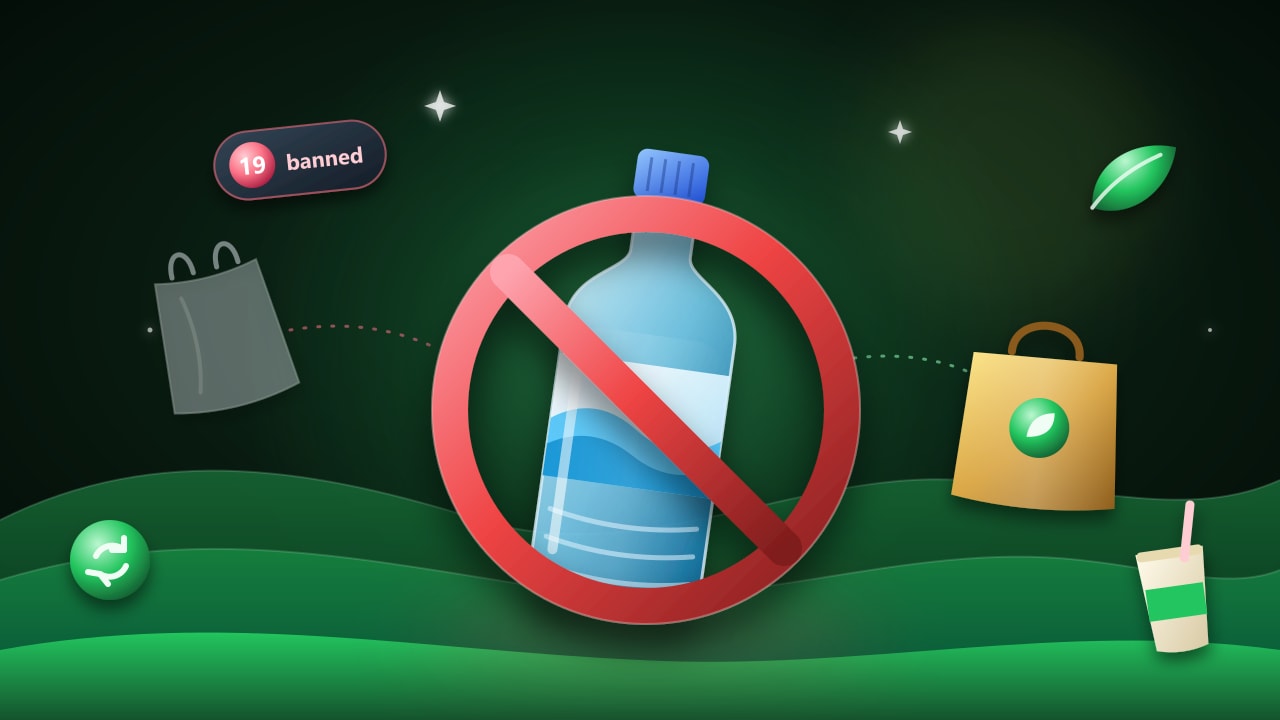
The Ministry of Environment notified the Plastic Waste Management Amendment Rules in 2021. From 1 July 2022 they ban 19 single-use items, including plastic straws, cups, plates, cutlery, stirrers, ear buds with plastic sticks, and thermocol used for decoration. The ministry describes these as items with high littering potential and low utility. Carry bags thinner than 120 microns were also banned from 31 December 2022.
The ban covers only some plastic. The Ministry told the Rajya Sabha on 12 December 2024 that India's states reported 41.4 lakh tonnes of plastic waste for 2022-23, up from 39.0 lakh tonnes in 2021-22. Down To Earth estimates that India makes about 5.5 million tonnes of single-use plastic waste a year. It puts the 19 banned items at about 0.6 million tonnes of that, or roughly 11%.
Most of the rest is packaging, and it is handled by a different tool called Extended Producer Responsibility, or EPR. Under the EPR guidelines of 16 February 2022, companies that put plastic packaging on the market must collect and recycle a set share of it. The Centre for Science and Environment found 7 lakh fake EPR certificates in a report of October 2024, issued by recyclers who did not do the recycling.
Enforcement data is patchy and mostly from states. In Karnataka, the pollution control board inspected 1,25,661 entities in 2022-23, but only 22,192 in 2023-24 and 18,111 in 2024-25. The widget below lets you test how much the ban could cut even if every shop followed it.
Points in favour
These points support the view that the ban works, or is a useful start.
- It removes the most littered items. The government chose items with high littering potential and low utility, such as straws, stirrers and thin cutlery. These are the items that litter streets and clog drains.
- It started a legal framework. The 2021 rules, the 2022 EPR guidelines and the national complaint app gave officials and citizens something to act on. The rules also gave one national list of banned items.
- Enforcement did start. Down To Earth reports that a CPCB campaign in the first months of the ban seized about 7.8 lakh kg of banned plastic and levied penalties of about ₹5.8 crore. States have kept seizing, and Karnataka seized 223 tonnes in 2024-25.
- It pushes industry to find alternatives. A ban creates demand for paper, wood and reusable options. The market for these is still small, but it grows only when the old product is taken off the shelf.
- Producers now share the cost. EPR makes companies responsible for the packaging they sell. This is the "polluter pays" principle, and it covers far more plastic than the ban does.
Points against
These points support the view that the ban does not work yet.
- It covers a small part of the problem. Down To Earth puts the 19 banned items at about 11% of single-use plastic waste, and industry estimates quoted by IndiaSpend in 2022 put it at only 2-3% of all plastic waste. So even a perfect ban leaves most plastic in use.
- Plastic waste has not fallen. The Ministry's figures show 41.4 lakh tonnes in 2022-23, the year the ban began, against 39.0 lakh tonnes in 2021-22. One year of data is not enough to judge, but there is no sign of a drop.
- Enforcement is weak and falling. Karnataka's inspections fell from 1,25,661 entities in 2022-23 to 18,111 in 2024-25. Down To Earth reports that complaints on the national app fell about 85% between September 2022 and March 2023.
- The ban hits small sellers harder than big brands. CSE's Atin Biswas pointed out in 2022 that 60% of packaging plastic waste comes from 30-35 brands, which the ban does not cover. A paper straw also costs ₹1 to ₹1.25, against ₹0.25 to ₹0.30 for plastic, so switching costs a small vendor more.
- The EPR system leaks. The CSE report found 7 lakh fake certificates and no virgin plastic makers registered. If the paper trail is false, the collection and recycling claims cannot be trusted.
Opening the discussion
You can open by defining the ban. "India banned 19 single-use items from 1 July 2022. Can a list of items cut a problem that comes mostly from packaging?" This works when the group is unsure what the ban covers.
You can open with a number. "India reported 41.4 lakh tonnes of plastic waste in 2022-23, the year the ban began. That is more than the year before." This works when you want to challenge the idea that the ban succeeded.
You can open with a question. "If the banned items are about 11% of single-use plastic waste, is that a ban or a start?" This works when you want the group to separate the rule from the results.
Concluding the discussion
A good conclusion says what the ban did, what it did not do and what would fix the gap. Most groups land on "right idea, too narrow, and too weakly enforced".
"We heard that the ban removed the most littered items and started a legal framework. We also heard that it covers about 11% of single-use plastic waste, and that inspections have fallen. So the ban is a useful first step, but it works only if enforcement is funded and the rules reach packaging, where most of the waste comes from."
Facts worth quoting
| Fact | Figure | Source and year |
|---|---|---|
| Single-use items banned from 1 July 2022 | 19 | Ministry of Environment, 2021 |
| Carry bags banned below this thickness from 31 December 2022 | 120 microns | Plastic Waste Management Amendment Rules, 2021 |
| Plastic waste reported by states | 41.4 lakh tonnes in 2022-23 | Ministry of Environment, Rajya Sabha reply, December 2024 |
| Banned items as a share of single-use plastic waste | About 11% (0.6 of 5.5 million tonnes) | Down To Earth, 2022-23 |
| EPR guidelines for plastic packaging | Notified 16 February 2022 | Ministry of Environment, 2022 |
| Fake EPR certificates found | 7 lakh | Centre for Science and Environment, October 2024 |
| Karnataka entities inspected | 1,25,661 in 2022-23, 18,111 in 2024-25 | The Hindu, as cited in 2025 |
| Global plastics treaty talks, Geneva | Ended without a text, August 2025 | World Economic Forum, 2025 |
Mistakes to avoid
- Saying all plastic is banned. Only 19 items and thin carry bags are. If you say the whole of single-use plastic is banned, the panel will correct you.
- Treating Karnataka as the whole country. The enforcement figures are for one state. Say "in Karnataka" when you use them.
- Judging the ban on one year of data. The waste figures are reported by states and change with how they count. Say "there is no sign of a drop yet", not "the ban failed".
- Blaming only the poor vendor. The ban hits small sellers, but the biggest sources of plastic are packaging firms. A balanced answer names both.
Practise group discussion
Reading won't make you fluent. Book a group discussion and practise speaking in a group. You will get a detailed feedback report after the session.
Book a group discussion